
Walk-In Cooler Installation Denver: Restaurant & Brewery Guide
New Walk-In Cooler Installation in Denver: What Restaurant & Brewery Owners Need to Know
Denver's food-and-beverage scene is booming — and every new kitchen, taproom, and cold-storage build-out needs reliable refrigeration from day one. Here's exactly how a new walk-in cooler or freezer installation works at Mile High altitude, what Crown Tonka boxes with Heatcraft systems deliver, and how Bronco Breeze HVAC handles your project from permit to handoff.
📞 Call 303-219-1000 — Free EstimateWhether you're opening a new Denver restaurant, expanding a brewery's cold-storage capacity, or replacing a failed refrigeration system in a commercial kitchen, the planning decisions you make before the box goes in the wall will determine how well your walk-in performs for the next 15–20 years. At Bronco Breeze HVAC (Mini-Splits by Joseph), we specialize in new walk-in cooler and freezer installation across the Denver metro — using Crown Tonka insulated panels and Heatcraft refrigeration systems that are proven in Colorado's high-altitude, four-season climate.
Why Denver's Altitude Matters for Walk-In Refrigeration
At 5,280 feet, Denver's thin air affects refrigeration equipment the same way it affects HVAC: compressors work harder, air-cooled condensers lose capacity, and refrigerant pressures behave differently than at sea level. If you install a walk-in system sized for a sea-level kitchen without altitude derating, you'll get a unit that runs constantly, struggles on 95°F August afternoons, and fails early.
Heatcraft's commercial refrigeration equipment is engineered with published altitude-correction charts, and our installations account for Denver's elevation in every calculation — from condensing unit selection to refrigerant charge. The result is a system that holds tight temperature bands regardless of the season, keeps your food safe, and doesn't spike your utility bill.
Important: Bronco Breeze HVAC installs new walk-in coolers and freezers and replaces existing refrigeration infrastructure. We do not service or repair existing refrigeration systems, and we don't install display cases, ice machines, reach-ins, or industrial ammonia systems. If you're planning a new build-out or a full infrastructure replacement, reach out for a walk-in cooler installation estimate.
Crown Tonka Boxes + Heatcraft Systems: Why We Choose This Combination
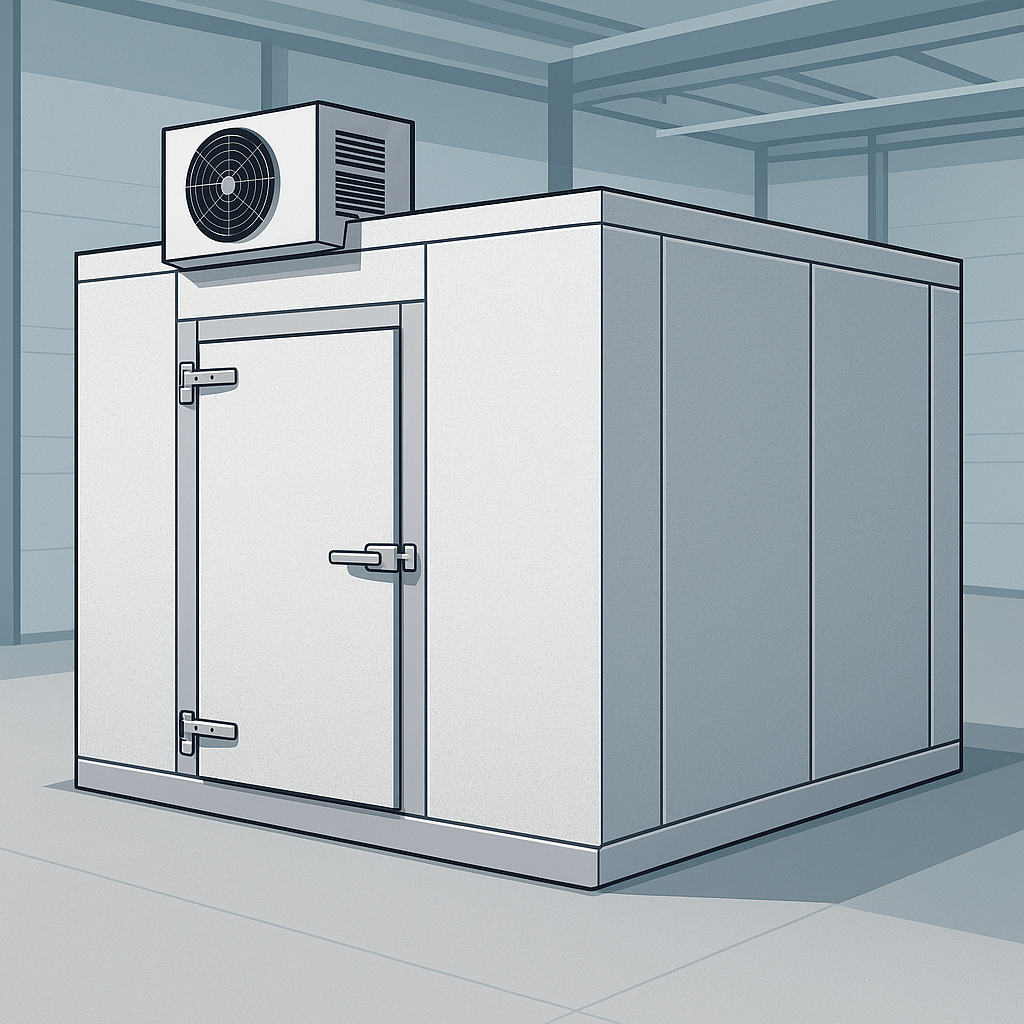
Not all walk-in panels are equal. Crown Tonka modular insulated panels use 4-inch polyurethane foam cores with tongue-and-groove interlocking joints that create an airtight, vapor-sealed envelope. For Denver food service operations — where humidity swings seasonally and temperatures fluctuate from 10°F in January to 95°F in July — a panel system that eliminates thermal bridging and air infiltration is the foundation of consistent performance.
Paired with Heatcraft refrigeration systems (Bohn, Larkin, Climate Control brands), you get condensing units and unit coolers designed for commercial food-service reliability. Heatcraft's product families cover everything from small cooler applications under 200 square feet to large freezer warehouses, all with published performance data at altitude. This is not off-the-shelf refrigeration — it's commercial-grade infrastructure built to match your load, your space, and Denver's conditions.
Sizing a Walk-In Cooler or Freezer in Denver
Accurate sizing is the most critical step in a successful walk-in installation. An undersized system will run continuously and never pull down to target temperature. An oversized system short-cycles, fails to remove humidity properly, and wastes energy. Proper sizing involves:
- Box volume and product load: total cubic footage, the mass and thermal properties of what you're storing (kegs hold more heat than fresh produce), and how often the door opens.
- Infiltration loads: how much warm air enters through the door during service hours and through imperfect panel seals.
- Ambient conditions: the temperature and humidity of the room where the cooler sits — a kitchen running six gas burners adds significantly more load than an unheated storeroom.
- Altitude correction: Denver's elevation reduces air-cooled condenser capacity by roughly 5–8% versus sea-level ratings. We apply manufacturer altitude factors to every condensing unit selection.
- Target temperature and pull-down time: a walk-in cooler holding 35–38°F is sized differently from a walk-in freezer holding 0°F, and a system expected to pull down a full product load quickly needs more reserve capacity.
We perform an in-person site survey before providing any equipment recommendation. Load calculations — not guesswork — drive the specification.
How the Installation Process Works
- Site survey & load calculation — We visit your Denver location, measure the space, review your product types and door-use patterns, and confirm electrical and drainage availability.
- Engineering & proposal — We select Crown Tonka panel configuration and Heatcraft equipment sized to your load, then provide a detailed written proposal with equipment specs and timeline.
- Permits & inspections — Denver requires mechanical permits for refrigeration systems. We handle the permit application and schedule all required inspections through the city.
- Panel installation — The Crown Tonka modular panels are assembled on-site. Floor systems, drains, door hardware, and lighting are installed in sequence.
- Refrigeration system installation — The Heatcraft condensing unit is set and connected; the unit cooler is mounted and piped inside. We braze refrigerant lines, pressure-test the system, and pull a deep vacuum before charging.
- Electrical & controls — We wire the system to code, install the temperature controller, and confirm door heater, defrost, and alarm circuits are functional.
- Start-up & commissioning — System is started, refrigerant charge is verified at operating conditions, and temperature pull-down is monitored to confirm performance matches design specifications.
- Owner walk-through — We review thermostat controls, defrost scheduling, alarm reset procedures, and routine maintenance tasks with your operations team.
Common Walk-In Applications We Install in Denver
| Application | Typical Size | Target Temp | Notes |
|---|---|---|---|
| Restaurant walk-in cooler | 8×10 to 10×12 ft | 35–38°F | Produce, proteins, dairy |
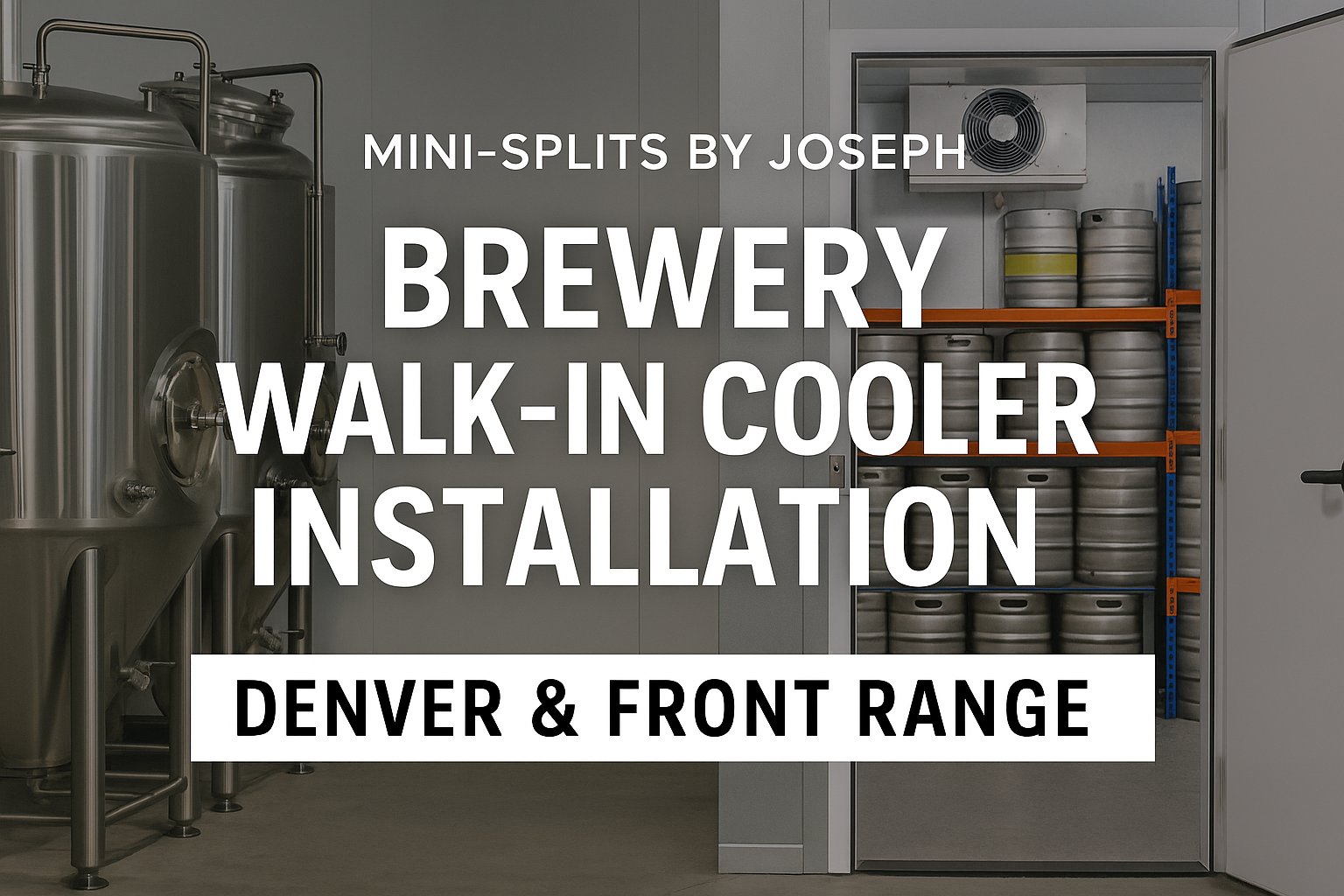
| Brewery / taproom cooler | 10×14 to 12×20 ft | 34–36°F | Kegs, cans, seasonal inventory |
| Walk-in freezer | 6×8 to 10×10 ft | -10 to 0°F | Frozen product, long-term storage |
| Combination cooler+freezer | Custom | Both | Shared wall panel saves space & cost |
| Commercial kitchen build-out | Varies | 35–38°F | New construction or gut-renovation |
Frequently Asked Questions
Do you service or repair existing walk-in coolers?
No. Bronco Breeze HVAC installs new walk-in cooler and freezer systems and handles full refrigeration infrastructure replacements. If your existing unit needs service or repair, you'll need a refrigeration service company. Our expertise is in new commercial refrigeration installation designed and built to perform for 15–20 years.
How long does a walk-in cooler installation take in Denver?
Most standard restaurant or brewery walk-in installations — box assembly, refrigeration equipment, electrical, and commissioning — take three to five business days from first day of work on-site. Larger installations, combination cooler-freezer units, or projects requiring significant electrical upgrades may run longer. We provide a detailed project schedule with your proposal so you can coordinate your operations accordingly.
Can you install a walk-in in an existing building?
Yes. The majority of our Denver installations are in existing commercial kitchens, taprooms, and food-service spaces. Crown Tonka modular panels can be configured to fit virtually any floor plan, and the condensing unit can be located on a rooftop, exterior wall bracket, or mechanical room as the site allows.
What electrical service do walk-in coolers require?
Most commercial walk-in cooler systems require a dedicated 208–230V single-phase or three-phase circuit. Walk-in freezers typically require three-phase power. We confirm electrical requirements during the site survey and can coordinate with your electrician or recommend one if a service upgrade is needed. Our team also handles the full electrical work and panel upgrades required for refrigeration installations.
Ready to Plan Your Denver Walk-In Installation?
Bronco Breeze HVAC installs Crown Tonka walk-in coolers and freezers with Heatcraft refrigeration systems across the Denver metro and Front Range. New construction, build-outs, and full infrastructure replacements.
Call 303-219-1000 or use our contact form for a free site survey and proposal.
Get a Free Walk-In Estimate →