
VRF System Installation for Lakewood Multifamily Buildings
Mini-Splits By Joseph handles VRF system installation in Lakewood, with cold-climate equipment, clear pricing and Xcel rebates credited up front.
VRF Heat Pump Systems for Lakewood Multifamily Buildings
Lakewood's multifamily market is growing fast, and older apartment complexes are wrestling with aging rooftop units that can't keep up with tenant comfort demands. Variable refrigerant flow (VRF) systems are rewriting the economics of comfort for Jefferson County property owners — delivering zone-by-zone control, all-electric efficiency, and dramatically lower operating costs at 5,520 feet.
📞 Call 303-219-1000Lakewood is Jefferson County's most populous city and one of the Denver metro's fastest-growing multifamily markets. While new builds are going up along Colfax and near the W Line light rail, thousands of apartment units in 1970s- and 1980s-era buildings still run on aging rooftop packaged units or split systems that weren't designed for today's tenant expectations — or Colorado's energy codes. That's where working with an experienced mechanical contractor in Denver makes the difference.
What Is a VRF System — and Why Does It Suit Apartment Buildings?
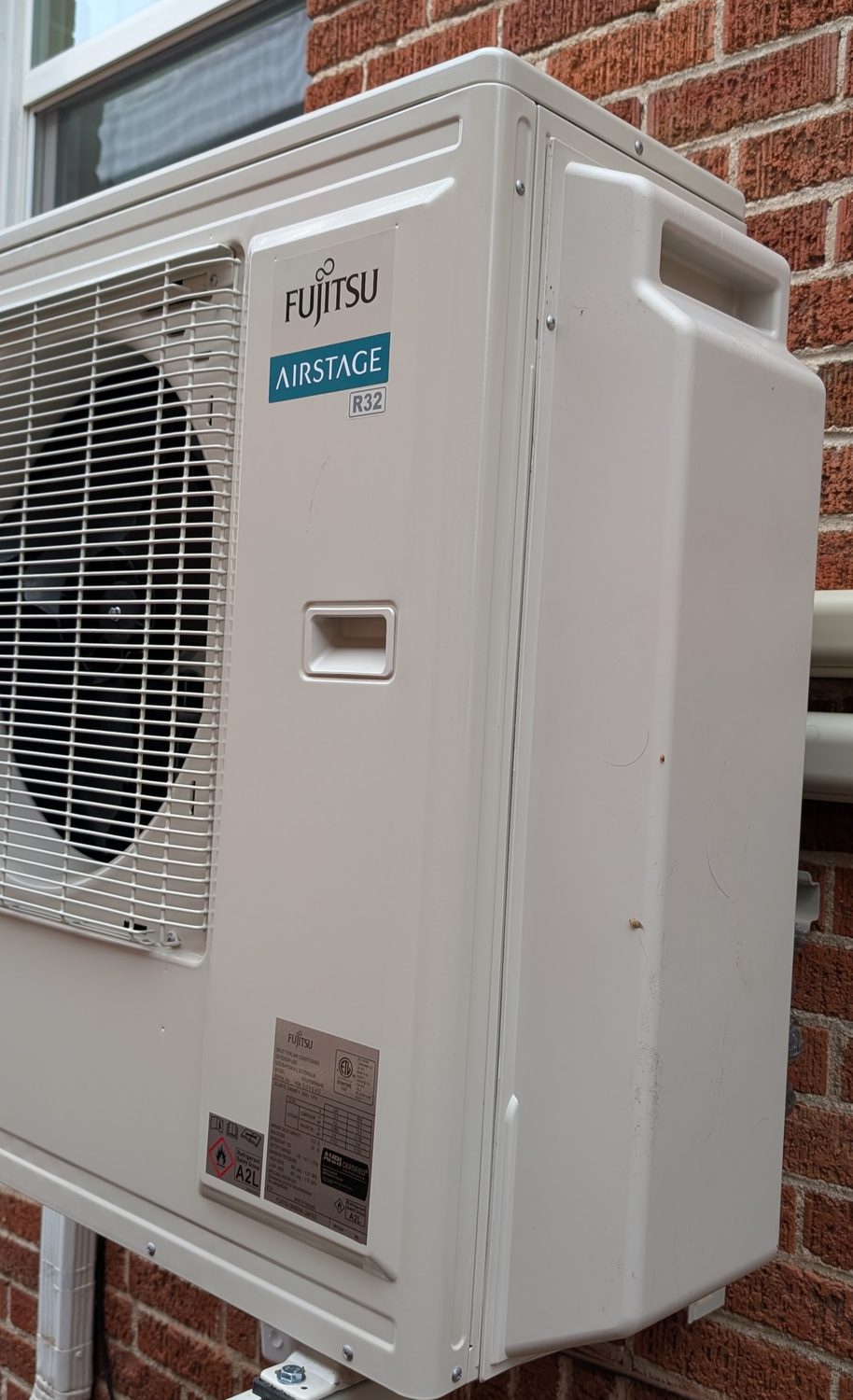
VRF stands for variable refrigerant flow. Instead of moving conditioned air through ductwork, a VRF system circulates refrigerant directly between a central outdoor unit (or a bank of outdoor units placed on a rooftop or at grade) and individual wall-mounted or ceiling-cassette indoor units in each apartment. Because each zone gets its own precise control, tenants can set their own temperature independently — a meaningful selling point in Lakewood's competitive rental market, where turnover costs are high and tenant satisfaction scores increasingly drive reviews.
The technology excels in multifamily settings for three reasons. First, modern heat-recovery VRF configurations allow simultaneous heating and cooling across different units — a south-facing apartment may need cooling while a north-facing one needs heat, and the system handles both at once by moving heat from one zone to another. Second, efficiency ratings are substantially higher than aging packaged equipment. Third, the compact refrigerant piping footprint simplifies installation in tight urban infill projects common in Lakewood's W Line corridor.
🔑 Key advantage for Lakewood property owners: One VRF outdoor unit array can serve 20 to 50+ individual apartments — dramatically reducing rooftop equipment footprint and long-term mechanical maintenance compared to running a separate packaged unit for every few units.
VRF vs. Traditional Rooftop Units for Lakewood Apartments
Many Jefferson County apartment owners are accustomed to rooftop packaged units (RTUs) — the kind common on 1980s garden-apartment complexes along Wadsworth or Sheridan Boulevard. RTUs are straightforward to understand, but they carry real drawbacks at scale. Each unit serves a fixed zone, efficiency drops sharply in Colorado's cold winters, and when one fails the tenants it serves immediately lose heat or cooling. Replacement requires crane access, significant capital outlay, and a disruption window measured in days rather than hours.
A well-designed VRF heat-recovery system reassigns capacity on the fly. If a zone doesn't need cooling at a given moment, that heat energy is redirected to a zone that needs warming — rather than being rejected to the outdoor air. At Lakewood's elevation, where January lows regularly drop below 10°F, that simultaneous heat recovery is especially valuable for a building with mixed solar exposures. It's not uncommon for a VRF retrofit to cut an older building's HVAC energy consumption by 30 to 40% compared to aging electric-resistance or low-SEER packaged equipment.
As a licensed commercial mechanical contractor serving the Denver metro, Mini-Splits By Joseph handles the full VRF scope: load calculations, equipment selection, rooftop or courtyard unit placement, refrigerant piping layout, indoor unit installation in individual apartments, and final system commissioning — all under a Jefferson County mechanical permit.
Altitude Considerations for VRF at 5,520 Feet
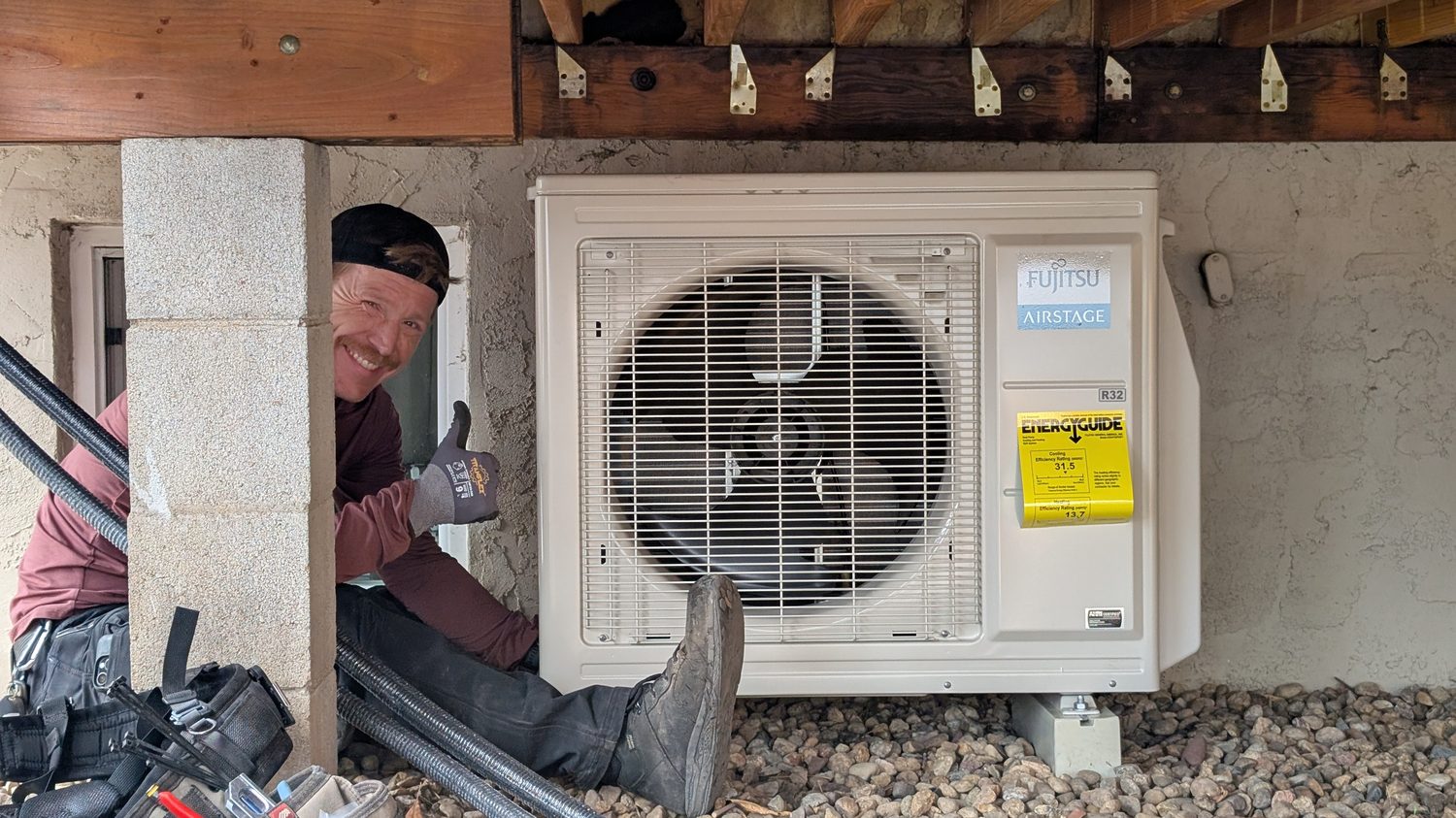
Contractors who don't specialize in Colorado sometimes undersize VRF systems because they work from sea-level capacity tables. At Lakewood's 5,520-foot elevation, ambient air density is roughly 17% lower than at sea level — which reduces both the heat rejection capacity of outdoor units and the airflow performance of indoor cassettes. For a Lakewood multifamily building, that means altitude derating must be applied during the load calculation phase, and equipment must be selected to meet the building's actual worst-case winter design temperature, which for Jefferson County is typically between −5°F and 10°F.
Properly derated and selected VRF systems perform excellently at Lakewood's elevation — the physics are well-understood and manufacturers publish altitude correction factors. The key is working with a mechanical contractor who actually uses them. All Mini-Splits By Joseph VRF proposals include altitude-corrected load calculations so building owners and their lenders have defensible engineering documentation.
VRF Installation Steps for a Typical Lakewood Apartment Building
- Building energy audit and room-by-room load calculation — We document each apartment's square footage, window area, orientation, insulation values, and occupancy load to produce a zone-level heating and cooling requirement that drives system sizing.
- System design and permit submittal — Our team lays out the refrigerant piping runs, selects outdoor unit capacity with altitude correction applied, and specifies indoor units for every zone. We pull the Jefferson County mechanical permit before any work begins.
- Outdoor unit placement and structural review — Rooftop, courtyard, or grade-level placement is determined by building structure, HOA or city setback requirements, and total refrigerant piping run lengths. Rooftop placements include a structural load review.
- Refrigerant piping and low-voltage wiring — Insulated refrigerant lines are routed from the outdoor unit to each indoor unit location. Each zone also receives dedicated control wiring for the zone controller.
- Indoor unit installation in each apartment — Wall-mounted or ceiling-cassette units are installed with minimal disruption. We coordinate access with property management and tenants to minimize time inside occupied units.
- System commissioning and owner walkthrough — Once all units are connected, we charge the system, verify operation in both heating and cooling modes, confirm controls functionality, and walk building management through the system interface and alarm monitoring.
Frequently asked questions
Can VRF be retrofitted into an existing Lakewood apartment building without major renovation?
Yes — VRF retrofit is one of the most practical commercial HVAC upgrades for existing multifamily buildings precisely because it doesn't require ductwork. Refrigerant lines are slim (typically 3/8″ to 5/8″) and can be routed through chase ways, utility closets, or along exterior walls with decorative line-set covers. The main coordination challenge is tenant access scheduling for indoor unit installation in occupied apartments — we work closely with property management to plan a phased schedule that minimizes disruption to residents.
How long does a commercial VRF system last, and what ongoing maintenance does it need?
Commercial VRF systems are engineered for 15 to 20-year service lives when properly maintained. Required maintenance is straightforward: regular filter cleaning for each indoor unit (which tenants can often handle themselves), annual refrigerant pressure verification, and a full system inspection every two to three years. Because VRF systems involve no combustion, no heat exchanger, and no boiler loop, there are significantly fewer failure modes than a traditional boiler-and-chiller plant, which translates to lower long-term maintenance costs and fewer emergency calls.
What's the difference between VRF heat recovery and VRF heat pump configurations?
A VRF heat pump system heats or cools the entire building in one mode at a time — it cannot simultaneously heat some apartments and cool others. A VRF heat recovery system uses a branch selector box to redistribute refrigerant so individual indoor units can be in heating or cooling mode simultaneously. For Lakewood multifamily buildings with mixed solar exposures, heat recovery is almost always worth the premium because it eliminates the energy waste of running the compressor in opposite directions for simultaneous loads — and significantly improves comfort consistency across all units.
Get a Commercial VRF Proposal for Your Lakewood Property
We specialize in multifamily and commercial HVAC across Jefferson County and the full Denver metro. Our team handles load calculations, permitting, and full system installation under one contract.
303-219-1000Request a Free Commercial Estimate